Operating container rail businesses can be a real challenge.
Connecting client deliveries, CTOs, and ECPs into your train planning and terminal operations- that provide customer-focused and profitable outcomes- requires the very best systems.
Rail operators who stay awake at night asking:
- Why are our train turnarounds taking longer than they should?
- Do our train consists always comply with wagon weight limits and DG reporting regulations?
- Why do we still have trouble loading-out trains as planned?
- Why can’t we consistently achieve utilization and profitability targets?
The answer to these questions is often that the systems they use don’t provide live, accurate, and concise reporting with the critical data required to answer these questions.
The hidden cost of manual rail operations
We still see some container rail logistics teams running critical parts of their operations on disconnected systems and manual processes. These processes need exceptional people to bring it all together, but as soon as someone is away or something is missed, the old saying is “It works – until it doesn’t.”
When it doesn’t, the costs add up fast:
- CTO and ECP planning and execution: Multiple booking systems with heavy penalties for late/missed slots and storage can wipe out profitability.
- Train dwell time: Without live data on container location or status, it slows loading, reduces train utilization, and increases the risk of trains missing valuable track access windows.
- Loading errors: Loading a DG container accidentally, exporting a container before fumigation, or moving under-bond import containers prior to release from Border Force will add significant costs and risk critical operational licenses.
- No real-time visibility: Without live connectivity between vehicles, gatehouses and forklifts, this leads to poor planning outcomes, urgent cargo missing next available trains, or scheduled truck movements that add cost and erode service performance.
- Compliance risk: Incorrect reporting of DG containers, inconsistent recording of forklift and driver fatigue opens the business to penalties when audited or accidents happen.
- Disconnected systems: When using siloed operating systems that don’t integrate your terminal ops team with your forklifts, your trucks, your customer service, and, importantly, feed live information to your clients, then bottlenecks and errors occur, which cost your business revenue and reputation.
Most failures in disconnected systems aren’t due to a lack of effort, but due to information delays and misinterpretation of issues between different systems.
What changes when rail operations are connected?
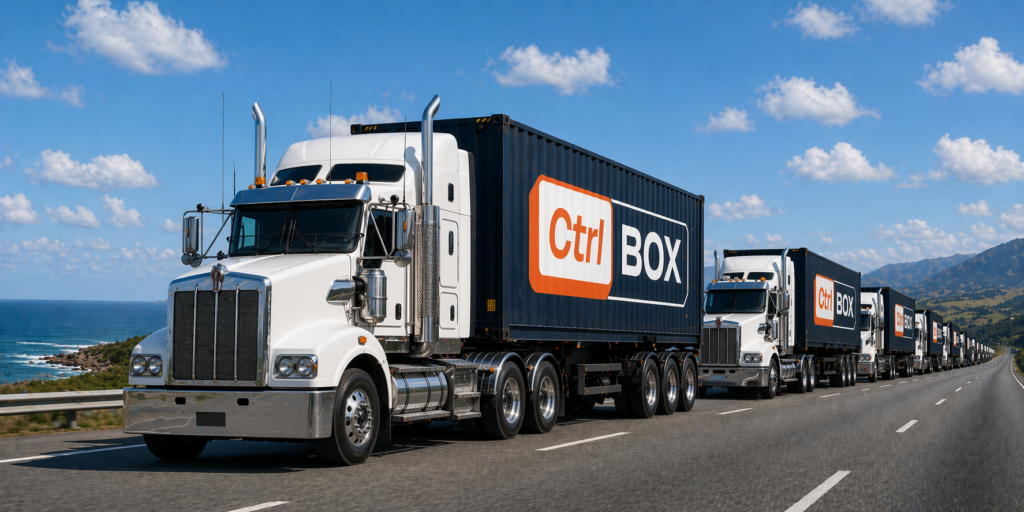
As the owners of CtrlBOX, we have previously owned and operated intermodal container rail terminals and ECP’s, and built this Rail Management System inside working intermodal environments for over 10 years.
We know the importance of connecting all the intermodal components to maximize train, truck and terminal utilization, delivery performance, and operational profitability.
Terminal interface planning tools display clear and concise information detailing truck/ITV arrivals and departures, as well as incoming and outgoing train loads, to accurately forecast and allocate sufficient staff and resource requirements.
CTO and ECP interface planning tools interact with OneStop and Container-Chain for seamless bookings, drag and drop from scheduler to truck/ITV. All vehicles are tracked using geofencing, providing average interface time and cost reporting to ensure you know your costs between your terminal, CTOs, and ECP’s.
Live train planning tools interconnecting your gatehouse, ITV, forklift and fumigation technician, allowing last minute delivery to trains and automatically confirms train Consists.
Train loading and Consist control. Create, edit, and auto-generate daily train Consists, confirmed by the loading unloading forklifts with the option for a supervisor to walk the train with a tablet to complete an additional train check providing full visibility from load planning to departure. Instant historical Consist access makes reviewing and improving performance easy.
Forklift last line of defense tools. Our smart load tools automatically calculate container weights against wagon capacity, alert forklift operators of DG, under-bond, export PRA’s and fumigation status, ensuring Consists comply with weight and DG reporting and the correct containers are loaded.
Compliance and safety, built in. Forklift, ITV and Truck tablets record driver pre-start, fatigue breaks and vehicle defects. Forklift tablets alert operators of wagon overloading and lock system until rectified. The system displays and alerts for under-bond status and wagon overload alerts. Every movement, load change, and inspection is logged, creating a full audit trail. Role-based access keeps the right data in front of the right people.
Seamless integration with clients to terminal yard, warehouse, and transport. Rail doesn’t operate in isolation, and your software shouldn’t either. CtrlBOX helps you synchronize train departures with container availability and last-mile delivery, so cargo moves end-to-end without manual handoffs.
Reporting that supports decisions, not just records them. KPI dashboards, train profitability and trend data give managers and executives a clear view of efficiency, utilisation, and service levels – so bottlenecks get caught before they become patterns.
The takeaway
The difference between a rail operation that scales and one that stalls usually isn’t the volume of freight – it’s whether the systems behind it can keep up. Real-time visibility, automated compliance, and integrated workflows turn rail from a standalone, error-prone process into a connected, efficient part of the broader logistics operation.
If manual processes are quietly costing your rail operation time, accuracy, compliance confidence, and revenue, it’s time to make the switch to CtrlBOX.
Learn more about the CtrlBOX Rail Management System.